
How to Install a Mailbox: A Step-by-Step Guide to Curbside Posts

What It Takes to Install a Mailbox

Here’s how to install a mailbox on a curbside post. Check the USPS height and curb rules, then call 811 to get buried lines marked. Dig a hole that buries the post no more than 24 in. deep, and set the post in concrete or packed gravel. Once it sets, bolt on the box with its bottom 41 to 45 in. above the road.
Curbside mailbox installation is the most common residential mailbox project, and one of the more approachable DIY jobs a homeowner can take on. Plan on a few hours of work for one or two people with basic tools, plus time for the concrete to set.
Working out how to put up a mailbox for the first time? This guide covers curbside posts, from the USPS rules to the final height check. For wall, column and mail slot installs, see When Your Mailbox Goes on the House or a Column.
USPS Rules for Installing a Curbside Mailbox
The rules for installing a mailbox come from USPS. Your box must sit 41 to 45 in. above the road and 6 to 8 in. back from the curb, show your house number, and carry the Postmaster General’s seal. USPS mailbox installation requirements apply to every residential curbside setup. If your box doesn’t meet them, your carrier or postmaster may notify you to fix it.
| Rule | Requirement | Source |
|---|---|---|
| Height | 41 to 45 in. from the road surface to the bottom of the box or the point of mail entry | USPS |
| Setback | 6 to 8 in. back from the curb. With no raised curb, ask your local postmaster | USPS |
| Address | House or apartment number on the box. Use the full street address if the box sits on a different street | USPS |
| Mailbox | Carries the Postmaster General’s (PMG) seal, or is a custom box your postmaster has approved | USPS |
| Post | USPS does not approve mailbox posts. Posts are often subject to local, state and highway rules | USPS-STD-7C, 8.2 |
Measure from the road, not the ground at the post. Low or sloped yards are where installs go wrong, because the ground there can sit inches below the road.
Contact your local post office before you install a new box or move one (USPS-STD-7C, 3.11.1). If you live in an HOA, check its rules on style and placement too. Keep the carrier’s approach clear of parked cars and plantings. For the wider rules on size and construction, see our USPS mailbox regulations guide.
Plan the Spot and Call 811
Before you dig, pick a spot the carrier can reach from the truck, then get buried lines marked.
Choose a Spot the Carrier Can Reach
Most mailboxes sit on the right-hand side of the carrier’s approach, along the curb line the route already uses. If you’re unsure, match your neighbors’ boxes. Keep the box clear of the driveway apron, where cars and plows hit boxes, and away from trees, hydrants and drainage ditches. Skip low spots that hold water. Before you move an existing box to a new spot, contact your local postmaster. Our guide to moving a mailbox walks you through it.
Call 811 Before You Dig
Call 811 before you dig anything. 811 is the free national call-before-you-dig service. Call, or file a request online at 811beforeyoudig.com, a few business days before you plan to dig. Then wait until every utility has responded or marked your yard, since timing varies by state. Shallow lines often run along the road edge, right where mailboxes go.
Choosing a Mailbox Post That Breaks Away Safely
A mailbox post should be a breakaway support: one that bends or falls away when a car hits it, instead of stopping the car like a wall. FHWA guidance, as published by USPS, sets the limits. Use a wooden support no larger than 4×4 in., or a 2 in. standard steel or aluminum pipe, buried no more than 24 in. USPS also warns against rigid supports such as heavy metal pipes, concrete posts, and farm equipment like milk cans filled with concrete.
Wood. A 4×4 wooden mailbox post rated for ground contact is the standard DIY choice. A cedar mailbox post suits traditional and craftsman-style homes. If you plan to install a mailbox on a wooden post, the steps below include the extra prep wood needs.
Metal and aluminum. These posts need less upkeep. Many decorative posts are engineered systems, so follow the post’s own instructions for in-ground or bolt-down mounting.
Fit. Posts aren’t universal. Match the post to your mailbox’s mounting pattern, or buy the box and post together as a package. Our mailbox posts category lists 74 posts and post parts, and our guide to the best materials for a mailbox post compares the options in more depth.
A locking or package-size box follows the same post rules. For one on the house or a column, see the section below.
Tools and Materials for a Mailbox Post Install
Having everything on-site before your mailbox post installation saves time and prevents mid-project trips to the hardware store.
Tools
- Post hole digger, or a rented auger for rocky ground
- Shovel
- 4 ft. level or post level
- Tape measure
- Drill and bits
- Wrench or socket set
- Two stakes and scrap boards for bracing
- Gloves and safety glasses
Materials
- Mailbox and post
- Gravel or crushed stone
- Fast-setting concrete: two 50 lb. bags for a 4 in. post in a 10 in. hole 2 ft. deep, per Quikrete
- Mounting hardware (check what comes with the box before buying more)
- House numbers
With a treated wood post, use hardware and fasteners rated for treated lumber.
How to Install a Mailbox Post, Step by Step
The best way to install a mailbox post: dig a hole about 10 in. wide, add gravel, set the post plumb (perfectly upright) in fast-setting concrete, then attach the box once it sets. The four steps below show how to install a post mount mailbox.
Step 1: Dig the Hole to the Right Depth
How deep should a mailbox post be in the ground? No more than 24 in., so it can still break away if a car hits it (USPS and FHWA guidance).
Dig the hole 4 to 6 in. deeper than that to make room for gravel, so the post itself still sits no more than 24 in. in the ground. Make it about 10 in. wide for a 4×4. Quikrete’s rule is a hole three times the post’s width.
In cold climates, frost heave (soil swelling as it freezes) can lift a shallow post. Gravel and a hole that’s wider at the bottom help. If your local road authority sets a different depth, follow it.
Step 2: Add Gravel for Drainage
Pour 4 to 6 in. of gravel or crushed stone into the bottom of the hole and tamp it down. The gravel drains water away from the post’s end, which slows rot on wood and corrosion on metal.
For wooden posts, brush a wood preservative labeled for below-ground use onto the bottom 6 in. where it will contact soil. Let it dry fully before setting the post.
Step 3: Set the Post in Concrete
How much concrete for a mailbox post? Plan on two 50 lb. bags of fast-setting concrete for a 4 in. post in a 10 in. hole 2 ft. deep, according to the Quikrete Fast-Setting Concrete spec sheet. Larger holes take more.
Here’s how to set a mailbox post so it stays straight. Stand it on the gravel, check it with a level on two adjacent sides, and brace it with two stakes. Then choose how to install a mailbox post with concrete: a dry pour or a bucket mix.
Option A: dry pour (fastest)
- Pour dry fast-setting mix around the post until it’s 3 to 4 in. below the top of the hole.
- Soak it with water, about 1 gallon per 50 lb. bag depending on your soil.
- Re-check plumb while it sets, which takes 20 to 40 minutes.
- Fill the rest of the hole with soil.
Option B: mixed in a bucket (more time to adjust)
Mix the concrete to a thick, workable paste. Place it in layers, tamping out air pockets as you go. Re-check plumb, then finish slightly below grade.
Either way, slope the top so water runs away from the post, then cover it with soil. Set times stretch in cold weather and shrink in heat, so follow the bag. Quikrete suggests hot water in severe cold and cold water in severe heat.
Step 4: Let the Concrete Set, Then Attach the Mailbox
Fast-setting concrete sets in 20 to 40 minutes, but Quikrete says to wait about 4 hours before you mount the mailbox. Waiting overnight costs nothing and protects the plumb.
Here’s how to attach a mailbox to a post. Use the hardware or mounting plate supplied with the box, and follow the box maker’s instructions. Not sure how to mount a mailbox whose base doesn’t match the post? Add a mounting bracket between them. Attach it firmly: FHWA guidance says the box must stay on the post if it’s struck.
Then check your work:
- Measure final height: the bottom of the mailbox should sit 41 to 45 in. above the road surface, not above the ground at the base of the post.
- Check that the door faces the road and that the door and flag move freely.
- Add house numbers if they’re not already on the box.
No Concrete? Setting a Post With Gravel and Soil
Should a mailbox post be set in concrete? Concrete is the usual way to stop a post leaning, but packed gravel and soil also work. Some state transportation departments ban concrete-set posts in the road right-of-way, or allow them only for designs proven to break away. Check your local rules before you pour.
Here’s how to install a mailbox post without concrete:
- Dig the same hole and add the gravel base from Steps 1 and 2.
- Set the post and fill the hole in 4 in. layers, alternating gravel and soil.
- Tamp each layer firmly before adding the next.
- Brace with two diagonal stakes for the first couple of days.
A gravel-set post is easier to pull out when the wood rots, with no concrete collar trapping water. The trade-off: it’s less firm in loose or sandy soil.
How to Replace a Mailbox or a Worn-Out Post
Whether you need to know how to replace a mailbox post or just the box, start by testing the post. Grab it at the top and push hard sideways. If it moves at ground level, leans, or shows rot at the base, it needs replacing.
New box on a sound post. Mounting patterns vary by maker, so check the new box’s pattern against your post before you buy, or plan on an adapter bracket. Remove the old box and clean any rust or debris from the top of the post. Bolt on the new one, then recheck the height.
New post. Dig out the old post and its concrete, or cut it off below grade if the new hole can go beside it. Then follow the four steps above.
When the box and post are both tired, replace them together with a mailbox and post package. If your post is still sound, browse our mailboxes sold without a post.
When Your Mailbox Goes on the House or a Column
Not every home uses a curbside post.
Wall mount. Switching from a curbside box to a wall box needs your postmaster’s permission. Mount it near the main entrance, where your carrier can easily see it. Wall boxes don’t need the PMG seal. Our wall-mount mailbox installation guide covers the steps.
Door slot. USPS sets a minimum opening of 1.5 x 7 in., with the bottom at least 30 in. above the floor. Browse our residential mail slots to compare sizes and styles.
Stone or brick column. The box sets into the column rather than onto a post. Our column mount mailboxes page has its own install section.
What It Costs to Install a Mailbox
Your mailbox installation cost depends mostly on the box and post you choose, not on the install. Here’s what they cost at MailboxWorks:
| Item | Typical price at MailboxWorks | Note |
|---|---|---|
| Mailbox without a post | $56.99 to $708.98 | 66 post-mount mailboxes |
| Posts and post parts | $45.97 to $1,209.98 | 74 items |
| Mailbox and post package | $154.99 to $1,999.99 | More than 300 packages |
| Gravel, fast-setting concrete, hardware | Local hardware store prices | About two 50 lb. bags of concrete for a standard post |
How much does it cost to install a mailbox if you hire someone? A handyman or local installer charges for labor on top of the materials, so get a few local quotes. For most homeowners, the box and post style is the biggest cost driver, and the install itself is a DIY job.
Mailbox Installation Mistakes to Avoid
Even a straightforward mailbox installation goes wrong when these steps get skipped.
- Burying the post too deep. Keep it no more than 24 in. in the ground. Never use a concrete post or a heavy metal pipe, because neither breaks away.
- Measuring height from the ground. Measure 41 to 45 in. from the road surface to the bottom of the box.
- Not calling 811. Even a routine post-hole dig can hit a buried utility line. It’s a free call.
- Skipping the gravel. Water then sits at the post’s end and speeds up rot.
- Checking plumb on one side only. Check two adjacent sides before the concrete sets.
- Loading the post too soon. Wait about 4 hours after a fast-setting pour before attaching the box.
- Buying a box that doesn’t fit the old post. Check the mounting pattern first, or use an adapter bracket.
- Using the wrong lumber. Untreated wood, interior-grade lumber and wood rated for above-ground use rot in the soil. Use lumber rated for ground contact.
Keeping Your Mailbox Post Straight and Solid
USPS suggests checking your mailbox at least once a year. Twice a year, in spring and fall, is better:
- Push the post at the top. Any movement means the base is loosening.
- Tighten mounting bolts and flag brackets.
- Check for rust or rot.
- Make sure your house numbers are easy to read.
- Test the door and flag.
Leaning after winter? Frost heave or a soft base is usually the cause, so re-set the post rather than shimming it. If your carrier skipped a delivery, check the height, the setback and anything blocking the approach. For worn hinges, flags or latches, see our replacement mailbox parts.
Get a Matched Mailbox and Post From MailboxWorks
Most of our mailbox and post packages let you buy the box and post in one order. Check each listing’s description for what’s included.
Choose from more than 300 mailbox and post packages, 74 posts and post parts, and post-mount mailboxes sold without a post for when you’re keeping a sound post. Orders over $30 ship free.
Not sure which post suits your mailbox? Our team is glad to help you match them before you dig. Call (866) 717-4943, Monday to Friday 6 am to 4 pm PT, or Saturday 7 am to 3 pm PT.
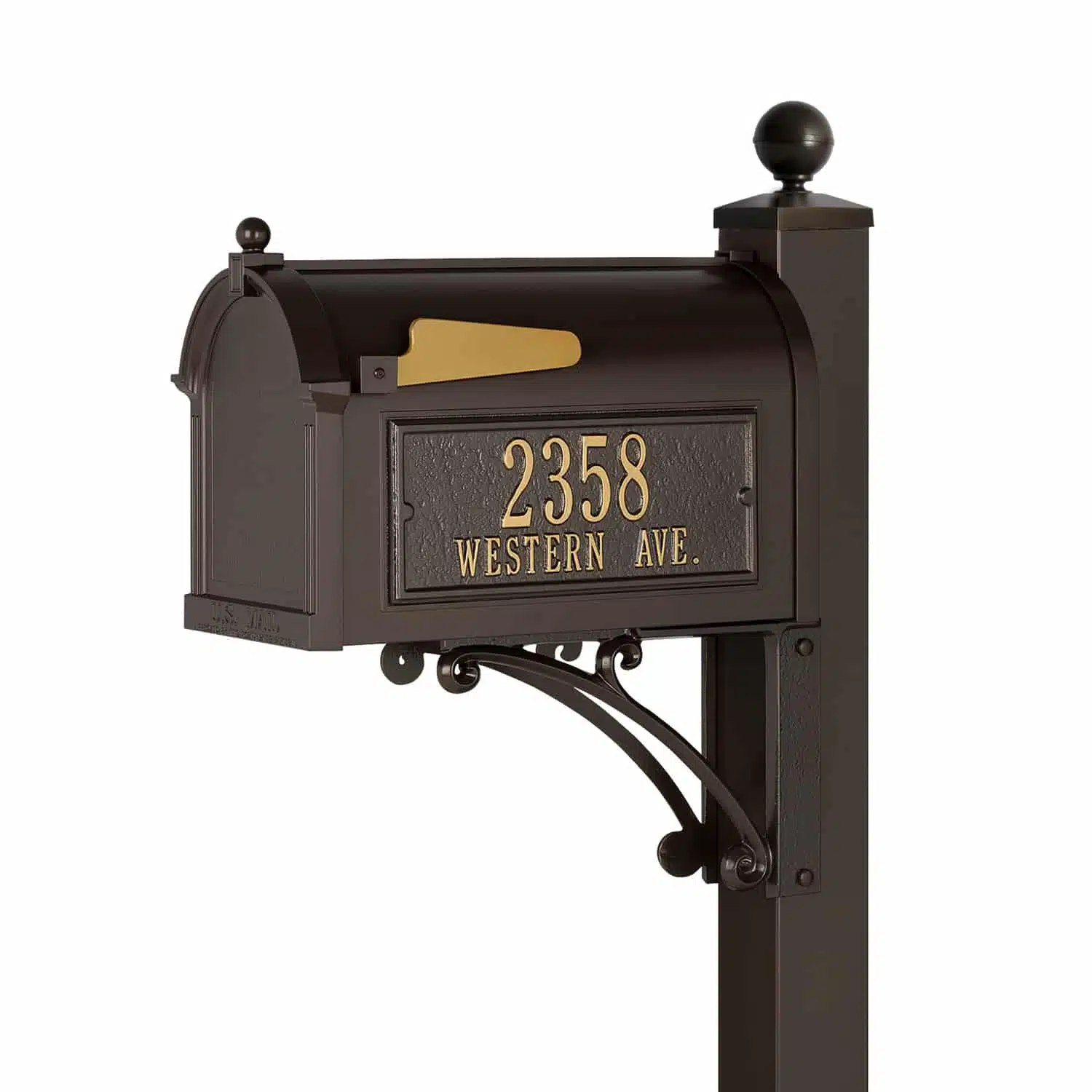
WhitehallWhitehall Custom Capitol Mailbox and Post Package (Optional Post & Accessories)
5 Available Colors
Mailbox Installation FAQs
Tags: Post Mount MailboxesCategorized in: Mailbox Installation & Upgrades